

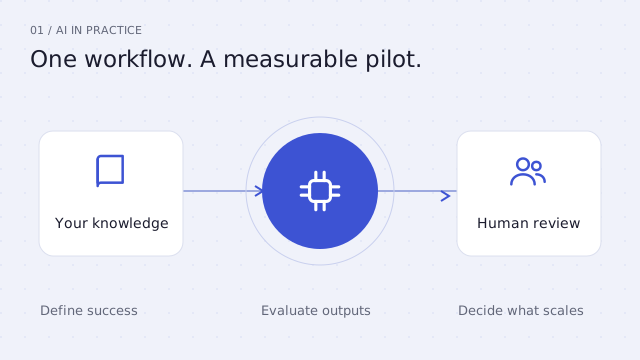
Before funding a wider AI rollout, a business needs evidence that the proposed tool can improve a particular piece of work. A pilot should help establish that evidence: what the system can do, where it makes mistakes and what it will cost to use and maintain.
Start with a process your team understands and a result someone can check. The following approach is intended for assistants, document processing and similar uses of generative AI.
Choose a task with a measurable business need
Describe the task before choosing a model or supplier. Record who does the work, how often it happens, which systems are involved and what causes delays or errors.
For example, a team might read delivery documents and enter selected details into an internal application. A pilot could extract those details into a draft record for a person to approve.
Compare the AI approach with simpler options, such as a form, an existing product feature or rules-based automation. The pilot needs to justify the additional complexity of AI for the task you have chosen.
Record the current process and agree on success
Measure the existing process before introducing the pilot. Include the time spent handling exceptions and correcting mistakes.
Choose evaluation criteria with the people responsible for the work. Different errors can have different consequences, so a single accuracy percentage may hide important problems.
| Decision | Evidence to collect |
|---|---|
| Does it reduce work? | Total handling time, including review, corrections and exceptions |
| Are the results acceptable? | Errors by type and severity, checked against reviewed examples |
| Can it handle ordinary demand? | Response times and completion rates under expected usage |
| Is it affordable to operate? | Model usage, hosting, integration, review and maintenance costs |
| Can the team use it? | User feedback, training needs and unresolved support issues |
Time saved may create additional capacity without reducing payroll costs. Explain which benefit you expect rather than treating every saved minute as a cash saving.
Evaluate representative examples
Include routine inputs, incomplete documents and difficult cases the team actually encounters. Use examples you are authorised to access and identify the expected result for each one.
Keep a separate set of examples for the final evaluation rather than judging only on inputs used to adjust the pilot. Record the model, instructions and configuration used, so later results can be compared meaningfully.
NIST’s Generative AI Profile cautions against generalising capabilities from narrow demonstrations and recommends checking sources and citations in generated outputs. Connecting an assistant to company documents does not remove the need to verify its answers.
Define data access and approval responsibilities
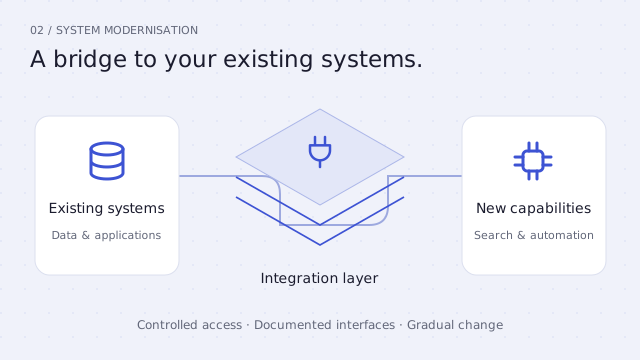
Identify which documents or records the system needs and which users are entitled to see them. A search assistant should enforce those permissions when retrieving information; adding documents to a shared index should not make them available to everyone.
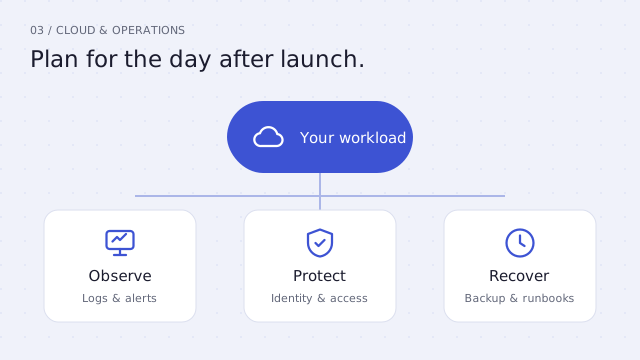
Review how data is processed, stored and retained by the services involved. Decide what needs to appear in logs and who can access those logs.
Separate preparing information from taking action. Extracting fields into a draft record has different consequences from changing a live business record. Define which actions need approval and enforce access restrictions in the application, rather than relying on instructions to the model alone.
Review the business case before expanding
Compare the pilot with the original process using the agreed criteria. Include the work required to integrate it, support users, monitor quality and maintain connections to other systems.
Before approving wider use, ask for:
- Results showing both useful outputs and significant errors
- The remaining limitations and how exceptions will be handled
- Estimated implementation and operating costs, with assumptions
- Named owners for the business process and technical operation
- A rollout plan with a way to pause the new workflow if needed
Continue when the evidence supports the investment. If it does not, revise the scope, try a simpler approach or stop before committing further resources.
AgentixBrain’s AI Integration & Automation service covers use-case assessment, pilot development, evaluation and application integration.